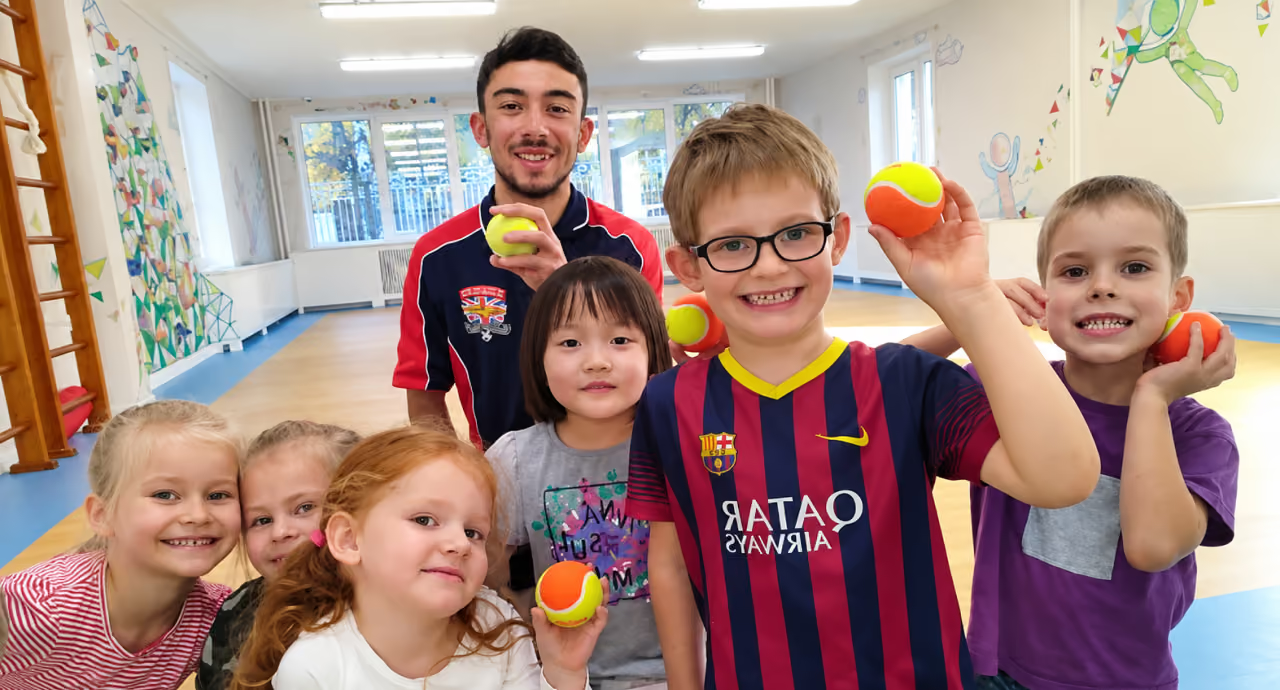
For some children, football is love at first kick. For others, the best way to discover a passion for sports is to experience a little bit of everything.
Running, jumping, throwing, catching, balancing, changing direction, working as a team and learning a new game - every activity gives children another opportunity to move, explore and build confidence.
That is the idea behind our multisports sessions.
Designed to introduce children to a variety of sports and movement-based activities in a fun, positive and supportive environment, our multisports programme is about much more than simply keeping children active. It gives them the opportunity to develop fundamental movement skills, discover what they enjoy and learn valuable social skills along the way.
At British Football School, our wider coaching philosophy has always been about helping children develop both as young athletes and as individuals. BFS welcomes kids of different abilities and backgrounds and places an emphasis on safe, educational and enjoyable sessions.
What Are BFS Multisports Sessions?
As the name suggests, multisports give children the opportunity to experience different types of physical activity rather than concentrating exclusively on one sport.
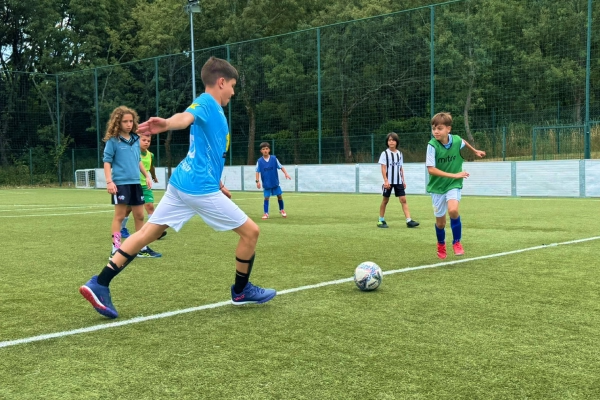
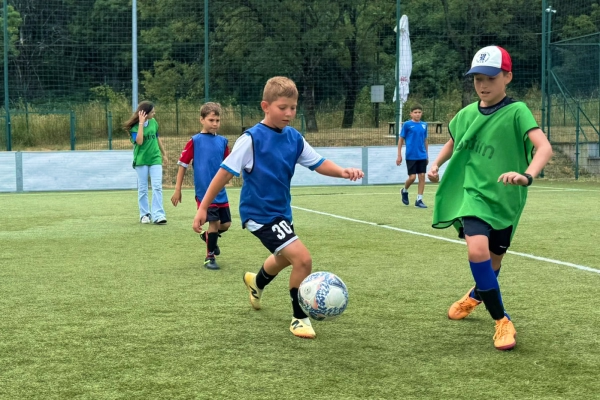
Sessions can combine games and activities that challenge children in different ways. Depending on the programme and age group, this might involve activities based around running, throwing, catching, coordination, agility, balance, teamwork, speed and ball skills.
The exact activity may change, but the objective remains consistent - to keep children moving, engaged and learning.
Instead of asking every child to arrive already knowing which sport they love or where their strengths lie, multisports give them room to explore.
One child may discover that they love activities involving speed. Another may enjoy throwing and catching. Someone else may thrive during team challenges. And a child who initially feels hesitant about sport may simply discover that being active can be fun.
That discovery matters.
Why Is Variety Important for Young Children?
Children are still developing their coordination, movement patterns, confidence and understanding of what their bodies can do. Giving them varied movement experiences can help build a broader foundation.
The concept is often connected with physical literacy - developing the confidence, competence and motivation that help people participate in physical activities. Research and consensus work also highlights the value of fundamental movement skills and varied structured and unstructured activity during childhood.
Think about the different challenges children encounter across sports.
They might need to accelerate quickly in one activity, maintain their balance in another, react to a moving object, coordinate their hands and eyes, change direction, communicate with teammates or make a quick decision.
Each challenge asks something slightly different of them.
Over time, these experiences can help create children who are not simply better at one particular drill, but more comfortable and confident with movement in general.
Multisports Doesn't Mean Giving Up on Football
For children who already love football, multisports can complement rather than replace it. Football itself requires a surprisingly broad range of abilities: balance, agility, coordination, acceleration, spatial awareness, reaction, decision-making and communication. Experiences from other activities can challenge these qualities in different ways.
And most importantly, children do not necessarily need to specialise in one sport very early in order to develop athletically. A statement from the American Orthopaedic Society for Sports Medicine concluded that early multisport participation does not prevent later competitive success and found no evidence that early specialisation is necessary for success in most sports.
For us, however, there is an even simpler reason to offer variety:
Children should have the opportunity to discover what they enjoy.
Building Confidence Through Movement
Not every child arrives at a sports session feeling confident. Some immediately run towards the action. Others need more time to observe, understand the activity and feel comfortable joining in. A varied multisports environment creates many different opportunities for success.
A child who finds one activity difficult may discover that they excel at the next. Someone who isn't the fastest runner may have excellent balance or coordination. Another child may become the teammate who communicates, encourages others and helps their group complete a challenge.
These moments can gradually change the way a child sees themselves.
Instead of thinking:
“I'm not good at sports.”
they can start to think:
“I can do this.”
That confidence is something we want children to carry beyond the session.
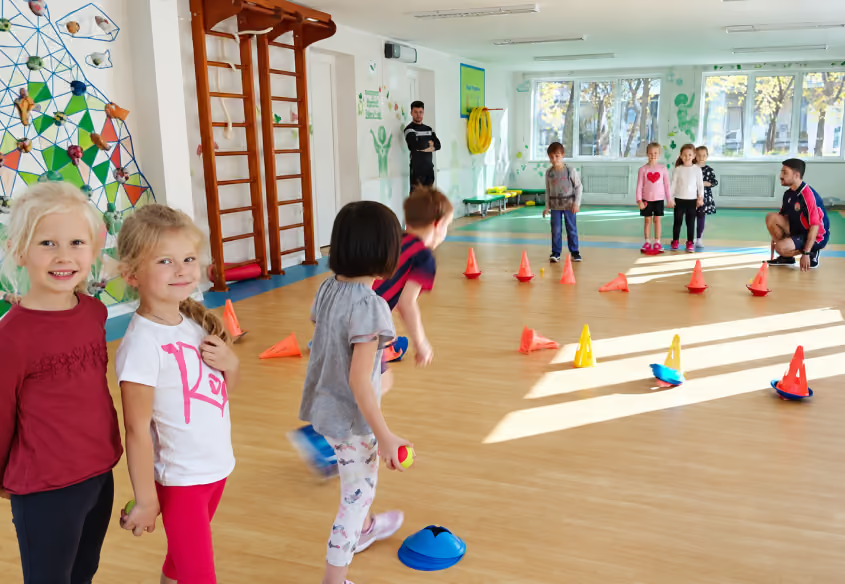
Learning to Be Part of a Team
Physical development is only part of the BFS multisports experience.
Sport naturally creates situations in which children need to interact with one another. They have to listen, communicate, take turns, follow rules, solve problems and sometimes deal with winning or losing.
A simple team challenge can teach a surprising amount.
Children learn to:
- encourage their teammates;
- communicate and listen;
- cooperate towards a shared goal;
- respect rules and other participants;
- respond positively when something doesn't go to plan;
- celebrate both individual and team achievements.
These are sporting skills, but they are also life skills.
This reflects our wider approach, where teamwork, confidence and a supportive environment sit alongside technical sporting development.
More Than Physical Skills
When parents think about their children's sport, physical benefits naturally come to mind first.
But quality sports experiences can offer much more.
Through regular participation, children have opportunities to practise concentration, perseverance, communication and decision-making. They experience small challenges and learn what happens when they keep trying.
They also meet other children.
They laugh.
They cooperate.
They solve problems.
They experience the satisfaction of mastering something that felt difficult five minutes earlier.
Research consensus on youth sport and physical activity similarly emphasises that healthy youth athletic development should support not only capable athletes but also inclusive, sustainable and enjoyable participation.
For BFS, that wider development is an important part of what sports can offer.
Interested in BFS Multisports Sessions?
Whether your child already loves sport or is only beginning to discover what they enjoy, we'd love to welcome them.
Get in touch with British Football School to learn more about current Multisports sessions, locations and availability.
contact@britishfootballschool.com
WhatsApp: +40 799 686 835