The start of a new football season brings plenty of excitement. New teammates, new goals, new challenges and the opportunity to build on everything learned during the previous year.
But a successful season doesn't begin with the first match. The weeks leading up to it can make a real difference.
Children need a balanced approach that gradually gets them moving again, rebuilds football-specific skills and, most importantly, makes them excited to return to the pitch.
So, what should a good pre-season training plan for a young player actually look like?
Why Is Pre-Season Important for Young Footballers?
School holidays often mean a change of routine. Some children remain very active through football camps, other sports and outdoor play, while others naturally spend less time training.
Neither is a problem.
What matters is that children don't go from several weeks of relatively little structured football straight into a full schedule of demanding training sessions and matches.
A gradual return gives players time to rediscover their rhythm and prepare physically and mentally for the season ahead.
Pre-season can help young footballers work on several areas at once: general fitness and movement, ball control and coordination, confidence, concentration and decision-making. It also gives children an opportunity to reconnect with something equally important - the enjoyment of playing football.
Don't Start Too Hard, Too Soon
One of the most common mistakes in pre-season is trying to make up for the entire summer in the first few sessions.
More isn't necessarily better.
After a break, training should increase gradually. A child who hasn't trained regularly for several weeks shouldn't suddenly be expected to complete long runs, intense drills and multiple football sessions within a few days.
The first goal is simply to get moving again.
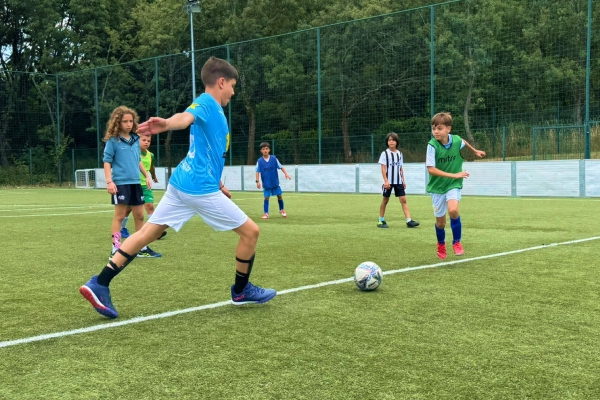
Running, changing direction, jumping, balancing, short bursts of acceleration and plenty of ball work can all form part of the return to football.
As the weeks progress, sessions can gradually become more demanding and more football-specific.
A Simple Four-Week Pre-Season Training Plan
Every child is different, and training should always be appropriate for their age, experience and current activity level. However, a simple four-week structure can help parents understand how pre-season might progress.
Week 1: Get Moving Again
The first week is about rediscovering movement rather than testing fitness.
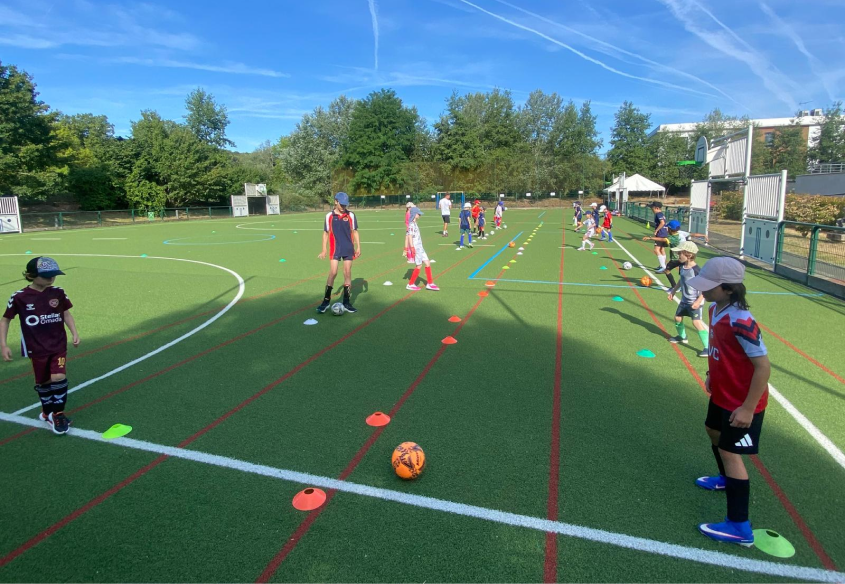
Keep sessions relatively short and enjoyable. Children can combine general physical activity with simple football exercises.
Good activities include:
- light jogging and movement games;
- dribbling with both feet;
- passing against a wall or with a family member;
- basic coordination exercises;
- short agility activities;
- other sports such as swimming, cycling or basketball.
This is also a great time simply to play football. Not every session needs cones, drills and instructions. A kickabout with friends can provide movement, touches of the ball and plenty of motivation.
Week 2: Bring Back the Ball
During the second week, football-specific work can become a bigger part of the programme.
Players can begin focusing on first touch, passing accuracy, dribbling, turning and shooting.
One useful principle is lots of touches, lots of variety.
Short activities can help maintain concentration while allowing young players to practise several different skills.
Week 3: Add Speed, Decisions and Intensity
By week three, training can start looking more like football.
This means introducing short bursts of higher-intensity movement and activities where the player has to react or make decisions.
IPre-season training should gradually prepare them for this.
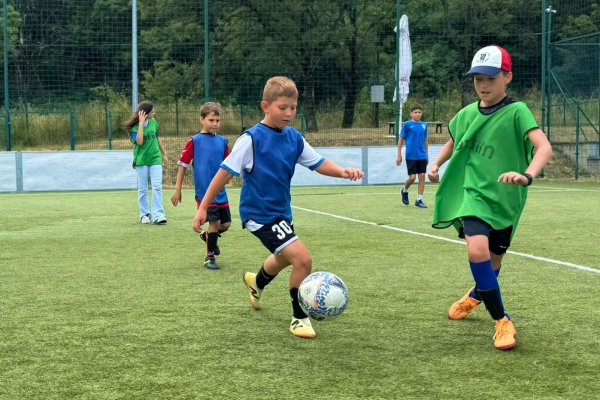
Small-sided games are particularly useful because they naturally combine fitness, technical ability, decision-making, communication and competition.
Week 4: Get Match Ready
The final stage is about preparing for the rhythm of regular football again.
Training can now include more game-like situations, changes of pace and longer periods of activity.
Rather than trying to achieve peak fitness before the season even begins, the aim is for players to arrive at their first sessions feeling ready, confident and excited to play.
This is also a good moment to start restoring the routine around football - preparing kit, arriving on time, eating appropriately before activity and getting enough sleep.
These small habits matter throughout the season.
Fitness Doesn't Have to Mean Running Laps
When parents hear "pre-season fitness", long-distance running may immediately come to mind.
But football requires many different types of movement.
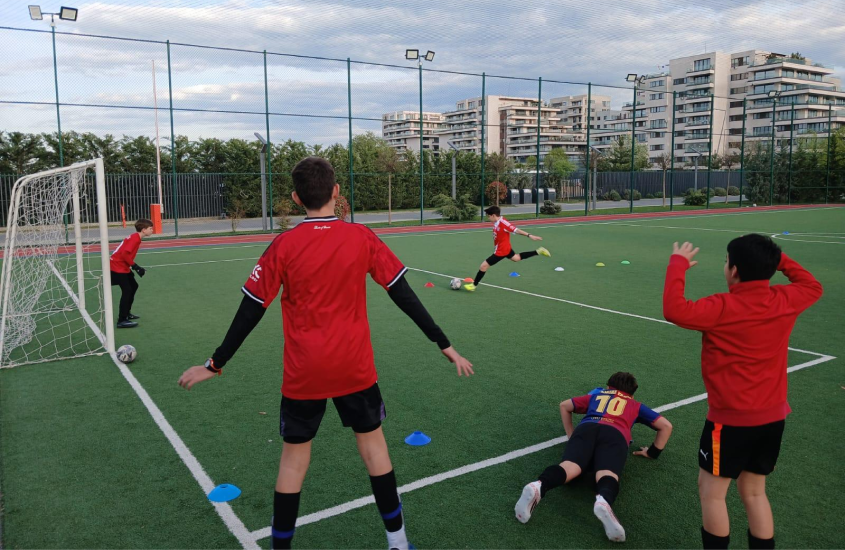
Players accelerate, slow down, change direction, jump, turn, react and recover repeatedly throughout a match.
For children, fitness work can therefore be incorporated into football activities rather than treated as punishment.
Relay races, small-sided games, dribbling challenges, reaction exercises and short sprints can all develop physical qualities while keeping sessions engaging.
And there is another benefit: when the ball is involved, children often forget that they're "doing fitness". They're simply playing.
Recovery Is Part of Training Too
A pre-season plan shouldn't only say what happens during training.
What happens between sessions matters as well.
Young players need adequate sleep, hydration, balanced nutrition and time to recover. Rest days aren't wasted days - they are part of a sensible training programme.
Parents should also pay attention to how their child feels.
Persistent tiredness, soreness or a sudden loss of enthusiasm can all be signs that the training load needs to be reduced.
Children don't need to arrive at the new season exhausted from preparing for it. :)
Set Goals - but Keep Them Simple
The beginning of a season is a natural time to talk about goals.
Encourage children to choose goals they can influence themselves.
For example:
"I want to become more confident using my weaker foot."
"I want to look up before I pass."
"I want to communicate more with my teammates."
"I want to keep trying when I make a mistake."
These goals shift the focus from comparison with other children to personal progress.
The Mental Side of Pre-Season
Not every child returns to football feeling completely confident.
Some may be joining a new group. Others may be worried that teammates have improved more than they have. A child attending football training for the first time may simply be nervous about not knowing what to expect.
That's why pre-season isn't only physical preparation.
It is also an opportunity to rebuild confidence.
Parents and coaches can help by focusing on effort rather than immediate performance. Mistakes are part of learning, particularly after a break.
The first few sessions shouldn't be a test of what a child has forgotten.
They should be an opportunity to rediscover what they enjoy.
A Pre-Season Checklist for Parents
Before the season starts, a simple checklist can help:
- Is the football kit still the right size?
- Do the boots fit comfortably?
- Does your child have a suitable water bottle?
- Has sleep gradually returned to a school-friendly routine?
- Has your child started being active regularly again?
- Have they had opportunities to play with the ball?
- Do they know when and where their first training session is?
And perhaps the most important question:
Are they looking forward to playing?
Because enthusiasm is one of the best foundations for development.
A New Season, A New Opportunity to Grow
Pre-season isn't about transforming a child into a completely different footballer in four weeks.
It's about preparation.
Gradually rebuilding fitness. Getting comfortable with the ball again. Restoring good habits. Building confidence. Setting a few achievable goals.
And getting excited about what comes next.
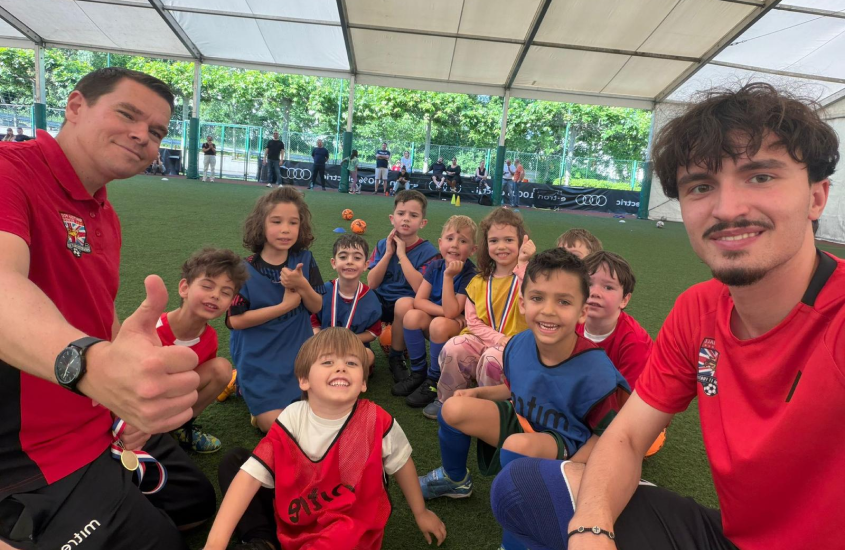
At British Football School, we believe player development goes beyond technical football skills. Through positive coaching and an encouraging environment, we aim to help children develop confidence, teamwork, discipline and a genuine enjoyment of the game.
As the new season approaches, the goal is simple:
Come back ready to learn, ready to play and ready to enjoy football again.

Ready for the new season?
British Football School welcomes players of different abilities to develop their football in a positive, supportive environment.
Join us for a free trial session and discover BFS for yourself.